Why CEOs, Investors, and City Planners Can’t Afford to Ignore the Rising Tide
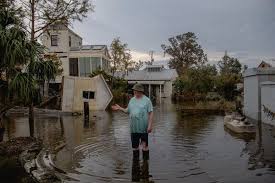
New York City’s historic rainstorm on Monday night wasn’t just a weather anomaly—it was a glaring warning for businesses, insurers, and municipal leaders across the world. With over 2 inches of rainfall hitting Central Park in a single hour, highways submerged, subway systems overwhelmed, and lives tragically lost in neighboring New Jersey, the event marks one of the most intense rainstorms in NYC history. And it’s a glimpse into a future that’s becoming the new normal.
For decision-makers in real estate, finance, infrastructure, and government, this isn’t just a meteorological story—it’s a $46 billion crisis in waiting.
Storms That Once Happened Every Century Are Becoming Annual Events
A 1-in-100-Year Storm Is Now a 1-in-10 Risk
New York’s Monday storm dumped more than 2 inches of rain in just an hour—breaking records and overwhelming a drainage system designed to handle only 1.75 inches per hour. This was the sixth time since 1991 that such an intense event has hit the city, despite no such storms being recorded before that year.
In Union County, New Jersey, over 6 inches of rain fell in just over an hour—killing two people when their vehicle was washed off a flooded road. These weren’t random acts of nature. They’re the direct result of a warming planet, moisture-laden skies, and infrastructure designed for a past climate.
What CEOs Should Know:
-
The cost of doing nothing is rising faster than the water levels.
-
Climate-related flood events are becoming predictable, and therefore actionable.
The Business Cost of a City Drowning
$19 Billion Damage from Sandy. $46 Billion Needed for NYC Resilience.
When Superstorm Sandy hit in 2012, it caused an estimated $19 billion in damage to NYC alone. It was supposed to be a once-in-a-lifetime event. Yet less than 15 years later, the city is facing storms with comparable infrastructure impacts.
New York City Mayor Eric Adams has allocated $1 billion over three years for stormwater improvements. But that’s not even a dent in the $46 billion experts estimate is needed to protect the city from a 1-in-100-year storm.
For infrastructure firms, insurers, and institutional investors:
-
There’s a clear market opportunity in resilience construction.
-
Every dollar spent on adaptation can return up to $6 in avoided damages, according to FEMA.
From Crisis to Opportunity
Turning Urban Weaknesses into Growth Sectors
The rainstorm wreaked havoc, but also created opportunity. Here’s how:
-
Real Estate Developers: Floodproof construction will command premium pricing.
-
Municipal Bonds: Cities seeking climate funding offer a new class of green infrastructure investment.
-
Insurtech & Risk Analytics: Demand for real-time climate risk tools will surge.
-
Tech Companies: AI-based flood prediction and alert systems are now must-have tools.
The city’s flood resiliency plan has already forecast a need for $46 billion in upgrades. The demand for solutions is already here—waiting for providers to act.
The Bigger Picture—It’s Not Just NYC
U.S. Flood Warnings at Record High in 2025
On the same day New York flooded, 96 flood warnings were issued nationwide—a new July record. Meteorologist Michael Lowry noted this is the highest number since flood warnings began being tracked in 1986. Other states like central Texas are also enduring one of the most intense flood seasons in recent memory.
Winter storms in the Northeast are also evolving—becoming more destructive as sea levels rise and Arctic ice loss drives volatile weather patterns. And new research suggests rainfall intensity in the Northeast could rise 52% by 2100 if current climate trajectories continue.
ESG Meets Urban Infrastructure
Why Climate Adaptation Must Enter the Boardroom
“We have an infrastructure that was designed for an environment we no longer live in,” said Rohit Aggarwala, NYC’s chief climate officer.
That’s not just a quote—it’s a corporate wake-up call.
Environmental, Social and Governance (ESG) frameworks often emphasize decarbonization, but increasingly, adaptation must take center stage. Flood protection, stormwater drainage, and climate-proof public transit are becoming ESG-critical issues.
Actionable steps for the C-Suite:
-
Audit your facilities for flood risk exposure.
-
Align capital budgets with climate adaptation benchmarks.
-
Collaborate with local governments on resilient infrastructure initiatives.
Policy Catch-Up Lagging Behind the Waterline
New Jersey Contemplates Expanded Flood Zones
Following Monday’s devastation, New Jersey is considering broad floodplain reclassification, requiring new builds in high-risk areas to be elevated. The climate doesn’t wait for regulation. Forward-looking developers and corporate real estate owners shouldn’t either.
From 2018 to 2021, the number of flood-prone areas across the U.S. grew by over 10%, yet most building codes haven’t caught up.
Ignore the Flood at Your Peril
Monday’s storm is not a freak occurrence—it’s a pattern. A new climate era has arrived, and cities are already bearing the brunt.
For business leaders, this isn’t just a climate story. It’s an infrastructure challenge, a financial risk, and a strategic opportunity rolled into one.
Because if you’re still designing for the 20th century, your portfolio is underwater. Literally.