Prabowo Grants Amnesty to Political Rivals Ahead of Independence Day
Analysts see unity gesture, critics warn of judicial interference
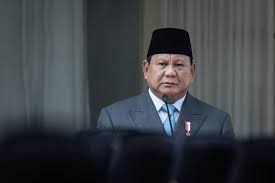
In a bold and controversial move just weeks before Indonesia’s Independence Day, President Prabowo Subianto has granted clemency to two high-profile political opponents recently jailed for corruption. The decision, framed by the government as a nation-building gesture, has ignited fierce debate over the balance between reconciliation and rule of law.
Two High-Profile Pardons, One Political Message
Hasto and Lembong Walk Free—But With Strings Attached
Late Thursday, Law Minister Supratman Andi Agtas announced that President Prabowo had issued clemency for Hasto Kristiyanto, secretary-general of the Indonesian Democratic Party of Struggle (PDIP), and Thomas Trikasih Lembong, former trade minister and former campaign manager for a rival presidential candidate.
Kristiyanto, convicted last week and sentenced to 3.5 years for bribing an election official, was granted amnesty—nullifying his sentence but retaining his conviction. Lembong, on the other hand, received abolition, which completely acquits him of charges tied to improper sugar import permits.
“These clemencies are part of a broader effort to foster national unity ahead of Indonesia’s Independence Day,” said Supratman, speaking at a press conference broadcast nationwide. “Both individuals have served the republic and represent political forces we must integrate, not isolate.”
Independence Day Traditions Meet Political Strategy
Pardons Extend Beyond Rivals—But Raise Tough Questions
Presidential pardons are not uncommon in Indonesia during August, a tradition of reconciliation that coincides with Independence Day celebrations on August 17. According to Supratman, more than 1,100 individuals received similar clemencies this year.
But unlike past years, the political weight of this year’s amnesties is hard to ignore.
-
Hasto Kristiyanto represents the PDIP, Indonesia’s largest party and former home of outgoing President Joko Widodo.
-
Thomas Lembong was a close ally of a Prabowo rival in the 2024 election.
Both had recently become symbols of corruption enforcement—and now, critics argue, symbols of its limitations.
Unity or Political Bargaining?
Critics Slam Pardons as “Transactional Justice”
Legal experts and anti-corruption watchdogs wasted no time in denouncing the clemencies as politically motivated.
“This is clearly a strategic move,” said Bivitri Susanti of Indonesia’s Jentera School of Law. “Hasto’s amnesty looks like a direct overture to PDIP, while Lembong’s release may be an attempt to diffuse public outrage.”
Susanti emphasized that while the president does have the constitutional authority to grant pardons, parliamentary approval is required, further tying the move into legislative strategy.
Human rights groups went further, warning that the pardons erode confidence in the judicial process.
“This sets a dangerous precedent,” said Muhammad Isnur of the Indonesian Legal Aid Foundation. “The government appears to be turning law enforcement into a political tool, offering clemency in exchange for support or silence.”
The Bigger Picture: Building a Broad-Based Coalition?
Prabowo Looks to Consolidate Power in Post-Election Era
Prabowo, a former general who once stood as a rival to Joko Widodo, emerged victorious in the February 2024 elections on a platform of economic nationalism and political pragmatism. Many observers say these pardons reflect his desire to build a centrist, multi-party coalition.
“He’s playing the long game,” said Dr. Achmad Surya of Universitas Indonesia. “If you want to govern a country as diverse as Indonesia, you can’t rule by exclusion. Forgiveness, even controversial, sends a powerful signal.”
But at what cost?
-
Indonesia remains ranked among the top 100 countries with the highest corruption perceptions, according to Transparency International.
-
The public backlash over Lembong’s sugar permit scandal had grown over weeks, especially among civil society groups pushing for food import transparency.
-
Amnesty for corruption charges, even if legal, raises questions about executive overreach and political loyalty as a substitute for accountability.
Legal Gray Zones and Political Realities
Understanding Amnesty vs Abolition in Indonesian Law
It’s important to distinguish between the types of clemency granted:
-
Amnesty (as given to Hasto) revokes the punishment but keeps the guilt intact. This means Hasto remains a convicted criminal, though he will not serve jail time.
-
Abolition (as granted to Lembong) erases both the sentence and the conviction, restoring full legal status.
Under Indonesian law, both powers are available to the president—but only with parliamentary approval. Given the fact that the PDIP holds significant sway in parliament, observers say this move may pave the way for political rapprochement between Prabowo and his former rivals.
What CEOs and Investors Should Watch
Political Stability vs Legal Uncertainty
For business leaders operating in Indonesia—or considering new investments—the latest clemency decisions present a mixed signal.
-
On one hand, Prabowo’s actions signal a desire for political unity, potentially ushering in more stable governance and faster passage of economic reforms.
-
On the other, the pardons may signal that corruption enforcement is negotiable, especially when it comes to politically connected individuals.
Investors in sectors like infrastructure, agriculture, and state-linked enterprises should pay particular attention. These industries are more vulnerable to shifts in political favoritism and regulatory volatility.
“The risk is less about instability, and more about inconsistency,” said a Jakarta-based executive at a regional investment firm. “If the rules change depending on who you know, long-term capital is going to hesitate.”
President Prabowo’s bold clemency move may be remembered as a turning point in Indonesian politics—either as a savvy masterstroke of national reconciliation or as a cautionary tale of transactional justice. The true impact will become clearer as the nation moves through its Independence Day celebrations and into the next legislative session.