As the Conference of Parties 28 (COP28) concludes in Dubai, a pivotal debate remains over whether fossil fuels should be phased down or phased out. Amidst the lobbying fervor involving governments, NGOs, industries, and corporations, West Asian countries and fossil fuel producers advocate for a phased-down approach, asserting that alternative solutions are not yet in place. This perspective emphasizes fossil fuels as transition vehicles for decarbonizing the global economy.
However, this tunnel vision on carbon overlooks the interconnected destinies of regions and the climate impacts that cascade across borders. Notably, the warming in West Asia is driving extreme heat and rainfall patterns over the Indian subcontinent, posing significant threats to vulnerable countries.
The warming of the desert regions in West Asia, driven by fossil fuel incomes, contributes to the region’s economic growth but simultaneously accelerates climate risks. This warming leads to changes in wind patterns, impacting the Arabian Sea and triggering events like cyclones, heatwaves, and extreme monsoon rain over the Indian subcontinent.
The recent COP28 discussions and potential decisions on phasing down or out fossil fuels raise geopolitical and security concerns. West Asian countries argue that transitioning to alternative economies may not be feasible for all nations in the region. This debate underscores the need for a broader perspective that considers the intricate climate bridge connecting West Asia to the Indian subcontinent.
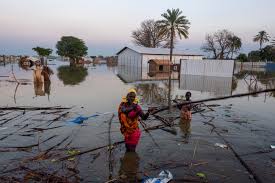
The article emphasizes the urgency of adapting to climate threats in the Indian subcontinent, including heatwaves, cyclones, floods, droughts, landslides, and crop damage. The author highlights the socioeconomic and geopolitical implications of climate impacts, emphasizing the necessity of effective fiscal policies and adaptation strategies.
India’s role in the region is crucial, as the country invests in weather and climate forecasts, early warning systems, and adaptation initiatives. The article calls for solution-oriented research and teamwork to address local climate risks and prioritize adaptation projects.
In conclusion, the article warns against a narrow focus on global warming targets and emissions reduction without considering the broader consequences of phasing out fossil fuels. The interconnected destinies of West Asia and the Indian subcontinent underscore the need for comprehensive strategies that balance climate action, economic growth, and geopolitical stability.