Hollywood Legacy Turns Tragic: Agent’s Son Dies by Suicide After Alleged Triple Murder
A Shocking End to One of L.A.’s Most Horrific Cases
In a case that stunned both Hollywood and the nation, Samuel Bond Haskell IV, the son of famed Hollywood agent Sam Haskell III, died by suicide in jail just days before his preliminary hearing. The 37-year-old was facing charges for the grisly 2023 murders of his wife and her parents, a crime that sent shockwaves through Los Angeles and beyond.
Haskell, who had pleaded not guilty, was being held without bail and was looking at life in prison without parole. Instead of facing justice, he chose to end his life in his Los Angeles County jail cell on Saturday, according to District Attorney Nathan Hochman.
“This is one last cruel act by someone who did the most horrific things,” said Hochman. “A family that has been dealing with unimaginable loss now has been robbed of their chance to face him.”
A Hollywood Connection: The Haskell Name
From Red Carpets to Crime Scenes
Samuel Haskell IV was the son of Sam Haskell III, once the powerful head of television at William Morris Agency, where he represented legends like Dolly Parton, George Clooney, and even Prince Edward. That elite pedigree made the case even more jaw-dropping.
Though his father retired two decades ago, the Haskell name still carried weight in Hollywood circles, turning what might have been a quiet domestic tragedy into a high-profile media circus.
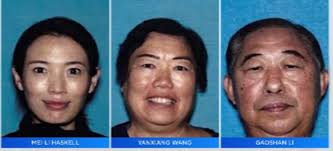
The younger Haskell had been living in a Tarzana home with his wife Mei Haskell, her mother Yanxiang Wang, her stepfather Gaoshan Li, and the couple’s three children. But what looked like a blended multi-generational household would soon be torn apart by one of the most horrifying crimes in recent California memory.
The Triple Murder That Stunned Los Angeles
Dismemberment, Dumpsters, and a Disturbing Discovery
The story began unfolding in early November 2023. Haskell allegedly murdered his wife and her parents, dismembered Mei’s body, and stuffed the remains into black plastic garbage bags.
On November 8, a passerby looking through a strip-mall Dumpster in Encino, just 5 miles from the Haskell residence, discovered a human torso wrapped in plastic. The body was so mutilated that it took the coroner’s office over a month to confirm it was Mei Haskell.
Investigators believe Haskell attempted to cover up the crime by hiring day laborers to remove the bags. When the men opened one and found human remains, they returned the bags and money, then went to the police. Tragically, their report was initially dismissed, as they spoke only Spanish and were allegedly not taken seriously.
Only hours later, Haskell was caught on surveillance dumping a bag into the Dumpster where Mei’s remains were eventually found.
Mei’s Parents’ Bodies Still Missing
To this day, the bodies of Mei’s mother and stepfather have never been located, deepening the grief and trauma for the family. Haskell was charged with three counts of murder, despite the lack of physical evidence for two of the victims.
A Family’s Tragic Backstory
From Dreams to Disaster
According to Mei’s uncle, Mei emigrated from China to study accounting at Cal State Northridge, where she met Haskell. The two married, and after the birth of their first child, her parents moved from China to help support the family.
Mei was reportedly the family’s main breadwinner, working multiple jobs to keep the household afloat. It remains unclear whether Samuel Haskell was employed at the time or whether his Hollywood family supported him financially.
A Suicide That Raises More Questions Than Answers
“Not Afraid of Prison—Afraid of the Spotlight”
Haskell’s jail suicide came days before his scheduled court appearance, a time when families of victims often begin to see justice take shape. According to his attorney, Joseph A. Weimortz Jr, Haskell feared the media attention more than he feared prison.
“He was not afraid of prison, but was afraid of an even larger media spectacle,” said Weimortz. “Ultimately, my client was even willing to take his own life, believing it would end this terrible chaos.”
The attorney added, “The Haskell family grieves every single life lost in this case.”
District Attorney Hochman expressed frustration that the victims’ families would never have a chance to face the accused in court or share impact statements.
A Case That Exposed System Failures
Language Barriers and Police Response Under Scrutiny
The initial response to the laborers’ tip—dismissing their report due to language barriers—has sparked a renewed debate on LAPD’s responsiveness to immigrant communities.
Critics argue the murder investigation could have started sooner had police acted on the early warning.
“This case exposes a blind spot in law enforcement response,” said a spokesperson for a local immigrant rights group. “If those men had been taken seriously from the start, perhaps Mei’s parents could have been found.”
What Happens Next?
Closure Eludes the Victims’ Families
While the accused is now dead, the families of Mei Haskell, Yanxiang Wang, and Gaoshan Li remain in mourning—and without closure.
-
No trial
-
No formal verdict
-
No chance for victim impact statements
The case may be closed in the legal sense, but emotionally and socially, the wounds remain open.
Investigators continue to search for the remains of Mei’s parents, and calls are growing for reform in how the LAPD handles non-English-speaking informants.
Samuel Haskell IV’s death may mark the end of criminal proceedings, but the tragedy he left behind will resonate far beyond a courtroom. A family was shattered, a Hollywood name stained, and a city left grappling with yet another gruesome chapter in its long history of real-life horrors.
As the Haskell and Mei families process their grief, the broader community is left with haunting questions: How could this have happened? And what can be done to prevent the next tragedy?