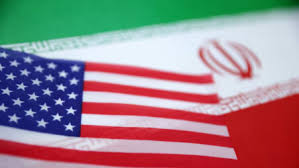
Tehran Sets the Terms: No Nuclear Talks Without U.S. Guarantees
As high-stakes diplomacy looms, Iran has signaled conditional readiness to re-enter nuclear negotiations with the United States. Deputy Foreign Minister Kazem Gharibabadi announced Thursday that Tehran is willing to return to the negotiating table — but only if Washington meets strict demands. This comes just a day before a critical summit with European powers in Istanbul.
The message is clear: Iran is done playing trust games and wants solid commitments before re-engaging in talks that have seen repeated collapses over the past decade.
What Iran Wants: Recognition, Respect, and Real Assurances
1. Recognition of NPT Rights
Gharibabadi emphasized that Iran expects full recognition of its rights under the Nuclear Non-Proliferation Treaty (NPT). Iran is a signatory to the NPT, which allows for the peaceful development of nuclear energy under certain safeguards.
“Our rights under the NPT are non-negotiable,” Gharibabadi stated.
For Tehran, this means the West — especially the U.S. — must stop treating Iran’s civilian nuclear ambitions as inherently suspicious. Iran insists its nuclear program is peaceful, even as Western intelligence agencies warn of potential weapons-grade enrichment capabilities.
2. No More Surprises: Demands for Non-Aggression Guarantees
Perhaps most critically, Iran is seeking written assurances that any resumed negotiations won’t be used as a smokescreen for future military threats or attacks.
This demand reflects the trauma of recent history. The Trump administration’s 2018 withdrawal from the Joint Comprehensive Plan of Action (JCPOA) — followed by targeted assassinations of Iranian figures and sanctions — left Iran politically burned and diplomatically wary.
“Negotiations must not become a trap for aggression,” Gharibabadi added.
3. Rebuilding Trust with Washington
Trust-building is central to Iran’s conditions. After years of sanctions, cyberattacks, and military confrontations — from the killing of Qassem Soleimani to the sabotage of nuclear sites — Tehran views trust with Washington as nearly non-existent.
Iran’s leadership is now demanding measurable steps from the U.S. — potentially including:
-
A phased lifting of sanctions
-
Unfreezing Iranian financial assets abroad
-
A commitment to refrain from regime change rhetoric
Istanbul Summit: Europe as Mediator, or Middleman?
EU Powers to Facilitate De-escalation Talks
European powers — likely including Germany, France, and the UK — are meeting Iranian officials in Istanbul to revive momentum for nuclear diplomacy. The EU remains a central player in the nuclear file, largely due to its role in brokering the original JCPOA deal in 2015.
Whether the EU can act as an effective intermediary remains unclear. On one hand, Europe is still seen as more neutral than Washington. On the other, it lacks the leverage to lift sanctions or guarantee long-term U.S. compliance — a major Iranian concern.
Analysts say Tehran is using the Istanbul platform to test the waters for a possible thaw with Washington ahead of the U.S. elections and any potential shift in leadership or policy continuity.
What’s at Stake: War or Diplomacy in 2025?
Nuclear Program at a Crossroads
Since the U.S. withdrew from the JCPOA in 2018, Iran has steadily expanded its nuclear program, enriching uranium far beyond the limits agreed upon in the 2015 accord. According to the IAEA, Iran’s enriched uranium stockpile is now approaching weapons-grade levels — though Iran insists it has not crossed the threshold of weaponization.
If talks fail, the region could face escalating tensions and potential military confrontation, especially with Israel’s repeated warnings that it will not allow Iran to develop nuclear weapons.
Global Oil Markets and Geopolitical Ripples
Failure to stabilize U.S.-Iran relations also has global economic implications. Renewed sanctions or conflict could disrupt oil exports from the Persian Gulf, driving up prices and fueling inflation globally. With fragile post-COVID economies, the stakes are higher than ever.
U.S. Position: Quiet Diplomacy, But No Guarantees Yet
While Iran has publicly outlined its expectations, the Biden administration has remained cautious and largely silent on preconditions. Officials in Washington have said the U.S. is open to diplomacy but have not committed to Iran’s demand for guarantees or pre-talk trust-building steps.
Moreover, with the 2026 U.S. presidential election already shaping national discourse, the White House may find its options limited by political pressure.
“We remain committed to preventing Iran from acquiring a nuclear weapon,” a senior U.S. official said earlier this week — leaving little room for flexibility in Tehran’s view.
Outlook: A Critical Inflection Point for Middle East Stability
Whether or not talks resume, and under what conditions, could determine the region’s trajectory for years. Iran’s demands in 2025 are not just diplomatic formalities — they’re deeply rooted in historical betrayal and strategic survival.
The Istanbul meeting represents a potential turning point — but only if the U.S. and its allies understand that diplomacy without trust is no longer on the table for Tehran.


