Gaza’s Humanitarian Crisis Deepens Amid Ongoing Conflict
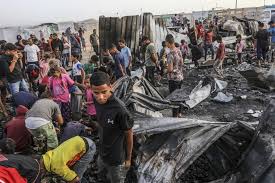
A devastating humanitarian incident unfolded in northern Gaza on Wednesday, as Israeli forces reportedly opened fire on a crowd of Palestinians waiting for aid, killing at least 30 people and injuring more than 300, according to Gaza’s civil defence agency.
The tragic event occurred near the Zikim crossing point, where aid trucks have been entering the war-torn enclave. Eyewitnesses and local officials describe a scene of panic and desperation as civilians gathered in hopes of receiving food and essential supplies — only to be met with deadly force.
The Israeli Defense Forces (IDF) have denied responsibility for the fatalities, stating that “warning shots” were fired in response to perceived threats and that no casualties were confirmed as a result of their actions. However, Gaza’s civil defence and local hospitals report otherwise.
Alarming Death Toll and Mounting Casualties
Eyewitness Accounts Paint a Grimmer Picture Than Official Statements
Spokesperson for Gaza’s civil defence, Mahmud Bassal, told AFP that at least 30 people were killed in the shooting incident, adding, “300 others were wounded as Israeli troops opened fire on the hungry crowd.”
Al-Shifa Hospital, one of the few remaining functioning hospitals in Gaza City, received at least 35 bodies following the incident, according to hospital director Mohammed Abu Salmiya.
Earlier the same day, 14 more Palestinians were reported killed in four separate incidents, three of them near other aid distribution sites, continuing a disturbing trend of violence surrounding humanitarian efforts.
The IDF confirmed the presence of crowds near aid trucks and troops but maintained that “troops fired warning shots in the area, not directed at the gathering… According to an initial inquiry, the IDF is not aware of any casualties as a result of IDF fire.”
Humanitarian Corridors Failing to Meet Urgent Needs
UN Warns of Famine as Tactical Pauses Fall Short
The United Nations Office for the Coordination of Humanitarian Affairs (OCHA) said that recent “tactical pauses” in Israeli operations — designed to allow aid convoys safe passage — have done little to alleviate the hunger crisis. “People are still dying of hunger, even during the pauses,” the agency said in its latest update.
Despite a daytime pause in military operations declared by Israel and limited air-drops of food by Jordan, the UAE, and Britain, the aid reaching civilians is insufficient.
France announced plans to send 40 tonnes of aid, beginning Friday, but logistical hurdles remain severe.
OCHA outlined the layers of approvals needed just for UN drivers to reach Gaza’s Kerem Shalom crossing:
-
Israeli mission approval
-
Coordination of a safe travel route
-
Clearance for multiple “green light” points
-
Suspension of aerial bombing
-
Physical access through secure gates
In the words of OCHA:
“Desperate, hungry people offload the small amounts of aid from the trucks that are able to exit the crossings.”
War Enters 22nd Month: Civilian Death Toll Surpasses 60,000
Ceasefire Talks Stalled as Famine Looms Over Gaza
The humanitarian catastrophe unfolds against the backdrop of a war that has raged for nearly two years. The conflict was triggered by Hamas’s attack on Israel on October 7, 2023, which left 1,219 people dead and 251 hostages taken — 49 of whom remain captive, with 27 presumed dead, according to Israeli military reports.
In retaliation, Israel has launched an extensive military campaign, resulting in over 60,138 deaths in Gaza, primarily civilians, according to Hamas-run health authorities.
Ceasefire Talks Break Down as US Reassesses Strategy
International Diplomacy Struggles to Halt Escalation
Efforts to negotiate a ceasefire remain in limbo. The United States and Israel withdrew their delegations from Doha last week, halting indirect negotiations with Hamas.
US special envoy Steve Witkoff is scheduled to visit Israel this week to explore “alternative options to bring our hostages home,” according to Israeli Prime Minister Benjamin Netanyahu.
Witkoff’s visit underscores mounting pressure on Washington to find a new strategy as the humanitarian and diplomatic crisis escalates.
Meanwhile, Arab states including Qatar, Saudi Arabia, and Egypt have called on Hamas to disarm and relinquish control of Gaza — a proposal aimed at ending the war and setting the stage for reconstruction and potential international oversight of the enclave.
The Bigger Picture: Aid, Accountability, and Global Perception
Humanitarian Aid as a Casualty of War
This latest incident not only raises serious ethical questions about the conduct of warfare but also highlights the breakdown of humanitarian norms in prolonged conflicts.
While Israeli authorities emphasize their intention to mitigate civilian casualties, the repeated targeting of or near aid distribution sites casts a shadow over such claims. With media restrictions and limited international access to northern Gaza, independent verification remains difficult — but the growing body of evidence suggests systemic issues with aid management and civilian safety.
For global CEOs, policymakers, and humanitarian leaders, this incident reinforces key challenges:
-
Humanitarian logistics under armed conflict
-
Reputational risks in conflict zones
-
The weaponization of aid as a tool of political leverage
Desperation at the Gates of Survival
The deaths of civilians waiting for food is a tragic and defining moment in Gaza’s ongoing crisis. Despite global awareness and aid pledges, logistics, politics, and military strategy continue to choke relief efforts.
With food becoming a symbol of resistance and survival, the world must decide whether humanitarian access will remain a protected right — or continue as collateral damage in a geopolitical war.