A High-Stakes Move in Washington’s Crackdown on Israel Critics
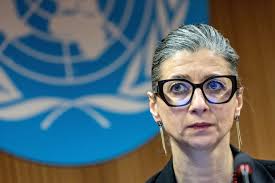
In a bold and controversial move, the Trump administration has sanctioned Francesca Albanese, the United Nations Special Rapporteur investigating human rights abuses in the occupied Palestinian territories. The decision marks the latest escalation in the U.S. government’s sweeping campaign to silence global condemnation of Israel’s 21-month military campaign in Gaza—a conflict that has already drawn war crimes accusations from international courts.
The announcement came Wednesday evening from the U.S. State Department, targeting Albanese for what officials called “a campaign of political and economic warfare” against both the United States and Israel.
Albanese, an Italian human rights lawyer, has been a vocal critic of Israel’s military operations in Gaza, repeatedly referring to them as “genocide”—a term the U.S. and Israel have fiercely rejected. Despite mounting international support for her assessments, the Trump administration has opted to retaliate with sanctions, accusing her of anti-Israel bias and antisemitism.
US Push to Remove Albanese Fails, Sanctions Follow
For months, the Trump administration has reportedly lobbied behind the scenes to have Albanese removed from her UN post, but those efforts failed in the face of strong backing from rights organizations and independent genocide experts. On social media Wednesday, Albanese responded cryptically, stating she stood “firmly and convincingly on the side of justice.”
In comments to Al Jazeera, she denounced the sanctions as “mafia-style intimidation techniques.”
The move to blacklist a UN special rapporteur is seen by many in the international legal community as unprecedented, potentially undermining the independence of UN human rights mechanisms. Amnesty International condemned the decision, while Dylan Williams of the Center for International Policy labeled the sanctions “rogue state behavior.”
Why Albanese Became a Target
A Relentless Voice on Gaza
Since taking up her mandate, Albanese has consistently accused Israel of breaching international law in its war on Gaza, which began on October 7, 2023. That day, Hamas-led militants stormed southern Israel, killing 1,200 people and taking 251 hostages. Israel responded with a relentless bombing campaign and ground offensive that has, according to Gaza’s health ministry, killed more than 57,000 Palestinians—most of them women and children.
Though Gaza’s health ministry does not distinguish between civilian and combatant deaths, international observers say the civilian toll is “astronomically high” and growing by the day. Albanese has repeatedly called this a form of “ethnic cleansing,” adding in a recent post: “We must stop this genocide… No one is safe until everyone is safe.”
In addition to her reports, Albanese has pushed for sanctions on Israeli leaders and issued letters calling for countries to pressure Tel Aviv economically. Most recently, she named several major U.S. corporations in a report accusing them of aiding Israel’s military infrastructure.
Washington: “Enough is Enough”
Trump’s Secretary of State, Marco Rubio, justified the sanctions on X (formerly Twitter), writing, “Albanese’s campaign of political and economic warfare against the United States and Israel will no longer be tolerated. We will always stand by our partners in their right to self-defense.”
Just last week, the U.S. Mission to the UN called for her removal, citing a “years-long pattern of virulent antisemitism.” The administration also described her genocide and apartheid accusations as “false and offensive.”
These sanctions are the latest in a broader crackdown by Washington on pro-Palestinian activism. Earlier this year, university professors and students were arrested and deported for participating in pro-Gaza demonstrations—prompting criticism from civil liberties advocates and free speech watchdogs.
Global Fallout and Legal Implications
A Chilling Message to International Monitors?
Rights groups say sanctioning Albanese sends a chilling signal to other UN monitors and independent experts investigating state violence. Amnesty International Secretary General Agnes Callamard—herself a former UN special rapporteur—warned that “governments must do everything in their power to mitigate and block the effect of the sanctions against Francesca Albanese.”
She added: “This is not about one person. This is about defending the entire infrastructure of global human rights accountability.”
Albanese’s role as a UN special rapporteur is unpaid and independent of the UN system, but her findings are often cited in court filings and diplomatic proceedings.
War Continues in Gaza: Ceasefire Blocked, Civilian Suffering Deepens
Meanwhile, the humanitarian crisis in Gaza shows no signs of easing. The United States recently vetoed yet another United Nations Security Council resolution calling for an unconditional ceasefire. That marked the fifth time Washington has blocked such a resolution since the start of the war.
More than 2 million Gazans have been displaced, and doctors report catastrophic shortages of medical supplies, fuel, and clean water. Aid groups say the number of dead and wounded is likely far higher than official figures suggest, with entire families buried in the rubble of flattened neighborhoods.
What Comes Next for Albanese—and for Gaza?
While the U.S. sanctions may freeze any American-held assets and restrict Albanese’s ability to travel to the U.S., they are unlikely to end her advocacy. In fact, supporters say the move has only amplified her platform.
As legal proceedings against Israel continue at the International Court of Justice and International Criminal Court, Albanese’s findings are expected to play a key role in framing the case for war crimes and genocide.
Whether the Trump administration’s heavy-handed tactics succeed in deterring global criticism—or trigger more—is a question that will define the geopolitical landscape around Israel and Palestine in the months to come.