A Flashpoint in American Democracy
In a move that has already ignited intense legal, political, and public backlash, U.S. Marines deployed to Los Angeles detained a civilian on Friday, marking the first known instance of such an action since President Donald Trump authorized the use of active-duty troops in the city.
The unprecedented decision, which follows days of protests over Trump’s controversial immigration crackdown, is being widely criticized as a dangerous expansion of presidential authority.
The Detention: What Happened on the Ground?
First Known Civilian Detention by Active Troops
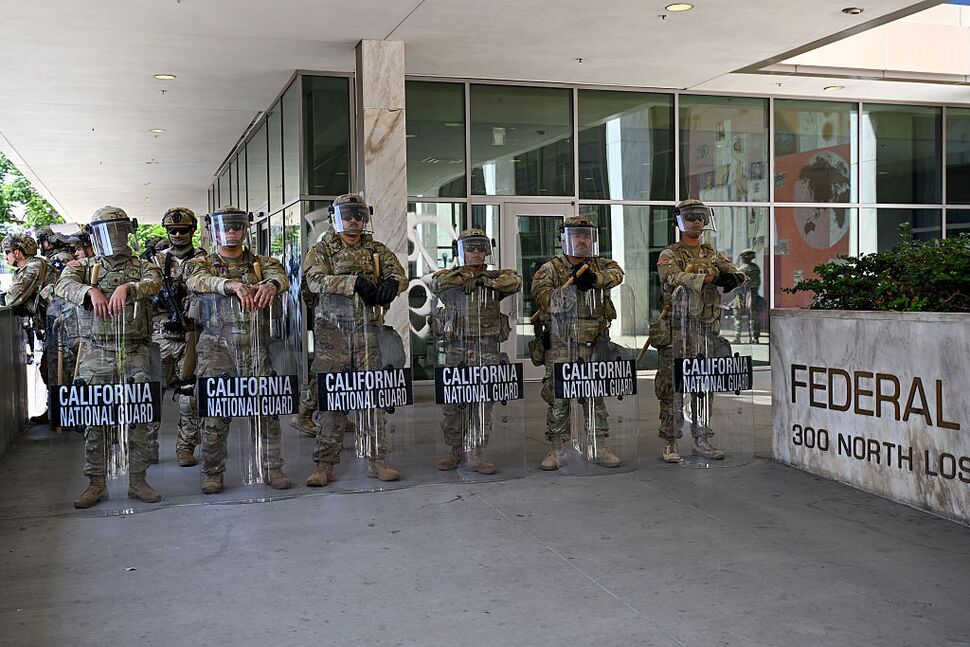
Marines took control of the Wilshire Federal Building in Los Angeles early Friday. As part of their mission to “secure federal infrastructure,” Marines temporarily detained 27-year-old army veteran Marcos Leao, after he inadvertently crossed into a restricted area cordoned off with police tape.
Reuters captured images of the incident showing Marines restraining Leao’s hands with zip ties before promptly transferring him to Department of Homeland Security (DHS) personnel.
The Military’s Response
A spokesperson for the U.S. Northern Command defended the Marines’ actions, stating that active-duty forces can “temporarily detain” civilians under specific circumstances and that detentions end as soon as transfer to civilian authorities is possible.
The Detainee Speaks Out
Leao, who earned U.S. citizenship through military service and was en route to the Department of Veterans Affairs at the time, told reporters after his release that he was treated “very fairly” and that the Marines were simply doing their jobs.
Trump’s Unprecedented Military Deployment
National Guard and Marines on U.S. Streets
The arrival of approximately 200 U.S. Marines in Los Angeles comes on the heels of Trump’s highly contentious decision to deploy National Guard troops to the city last weekend—over the strong objections of California Governor Gavin Newsom.
This is the first large-scale domestic military deployment by a U.S. president in over half a century and has quickly become a constitutional flashpoint.
Why Are Troops in Los Angeles?
The troop deployment followed ongoing protests in Los Angeles against Trump’s aggressive immigration enforcement policies, which have resulted in mass raids and detentions of undocumented immigrants across multiple cities.
Despite curfews and a generally peaceful tone to the protests in recent days, the White House claimed the situation warranted federal intervention to protect government property.
Legal Battles and Political Fallout
Federal Judge Attempts to Block Trump’s Move
On Thursday, U.S. District Judge Charles Breyer issued a ruling in Newsom v. Trump, temporarily blocking the deployment of active-duty military personnel for civilian law enforcement.
However, the administration swiftly appealed, and a higher court paused the ruling until at least Tuesday, when the case will be revisited.
Governor Newsom Speaks Out
Governor Gavin Newsom has publicly accused Trump of lying about alleged consultations regarding the deployment, calling the president a “stone cold liar” in a podcast interview with The New York Times.
Democratic leaders, civil rights organizations, and immigrant advocacy groups have condemned Trump’s actions as an authoritarian overreach aimed at silencing dissent.
The “No Kings” Movement: Mass Protests Planned
Nationwide Demonstrations Set to Coincide With Trump’s Military Parade
Millions of Americans are expected to join the “No Kings” protests on Saturday across approximately 2,000 locations nationwide, demonstrating against what they see as Trump’s abuse of power and creeping authoritarianism.
The protests are timed to overshadow Trump’s lavish military parade in Washington, D.C., commemorating the 250th anniversary of the U.S. Army and the president’s 79th birthday.
Critics Slam Parade as Authoritarian Display
The parade, inspired by France’s Bastille Day and reportedly costing up to $45 million, will showcase tanks, armored vehicles, aircraft flyovers, and a message from an astronaut in space.
Opposition leaders argue that the event is less about national pride and more about Trump’s ego and personal branding.
Growing Discontent Within the Military
Soldiers and Families Speak Out
Several National Guard troops and their families have voiced discomfort with their current mission. According to Sarah Streyder of the Secure Families Initiative, many service members feel their deployment serves a political purpose rather than a national security need.
Chris Purdy of the Chamberlain Network echoed these concerns, noting that many troops have reported low morale.
“We Didn’t Sign Up for This”
“The sentiment across the board right now is that deploying military force against our own communities isn’t the kind of national security we signed up for,” Streyder stated.
Escalating Incidents Across the Country
Senator Forcibly Removed at Press Conference
Tensions escalated further when California Senator Alex Padilla was forcibly removed and handcuffed by Secret Service agents after attempting to ask a question during a press conference held by Homeland Security Secretary Kristi Noem in Los Angeles.
The viral video of Padilla’s ejection has sparked bipartisan debate, with most Republicans condemning the senator’s actions, while Democrats applauded his defiance and decried his treatment.
Isolated Arrests Continue
While widespread violence has largely subsided, sporadic arrests continue across Los Angeles, including that of Jose Manuel Mojica, charged with assaulting a federal officer during protests in Paramount.
A Nation at a Crossroads
Trump’s decision to deploy active-duty troops on U.S. soil marks a profound moment in American history, raising urgent questions about the balance of power, civil liberties, and the role of the military in domestic affairs.
With protests swelling, legal challenges mounting, and public opinion sharply divided, the coming days may be pivotal in defining the legacy of this extraordinary presidential action.
As one protester’s sign in Los Angeles put it:
“This isn’t about safety. It’s about control.”