A Strike That Could Reshape the Middle East
Israel’s long-threatened pre-emptive strikes on Iran’s nuclear facilities have plunged U.S. politics into a new maelstrom, with Donald Trump and Republicans praising the attack, while key Democrats condemn it as a reckless move that could sabotage crucial nuclear negotiations.
The controversial assault now risks igniting a broader regional conflict and potentially derailing diplomatic efforts that have spanned multiple administrations.
Republicans Rally Behind Israel’s Military Action
Trump and GOP Leaders Applaud the Strike
Former President Donald Trump and top Republican lawmakers wasted no time in supporting Israel’s decision to launch decisive strikes against Iran’s nuclear infrastructure.
“Israel must never allow Iran to acquire nuclear weapons,” said John Thune, Republican Senate Majority Leader. “Today, they took necessary action to protect their people and their future.”
House Speaker Mike Johnson echoed Thune’s support: “Israel has every right to defend itself. Their decision was justified and overdue.”
Trump himself, who reinstated hardline policies against Iran after pulling the U.S. out of the 2015 nuclear agreement during his first term, applauded the strikes. He added that Iran now has “perhaps, a second chance” to return to negotiations—a statement many Democrats found deeply contradictory.
Democratic Leaders: Israel’s Strikes Jeopardize Peace Talks
Fears of Escalation and Breakdown of Diplomacy
While Israel’s right to self-defense remains widely recognized in Congress, many Democrats expressed grave concern that the strikes were deliberately timed to destroy ongoing diplomatic efforts.
Senator Chris Murphy of the Senate Foreign Relations Committee warned that the attacks could trigger a devastating regional war.
“Israel’s attack was clearly aimed at derailing the Trump administration’s negotiations with Iran,” Murphy said. “This is a disaster orchestrated by Trump and Netanyahu, risking American lives and Middle Eastern stability for political gains.”
Why Now? Democrats Question Timing
Senator Tim Kaine raised sharp concerns over the timing, with U.S.-Iran negotiations scheduled for this weekend.
“I cannot understand why Israel would launch a pre-emptive strike knowing these diplomatic talks are the only sustainable path to halt Iran’s nuclear ambitions,” Kaine said.
Senator Mark Warner, the Democratic vice-chair of the Senate Intelligence Committee, offered a more measured response, urging caution while emphasizing the need to avoid escalation.
“This is a rapidly evolving situation. The U.S. must work with our allies to ensure we don’t spiral into a broader conflict,” Warner said.
Trump’s Middle East Gamble: A Tense Diplomatic Backdrop
Trump’s Contradictory Stance on Iran
Ironically, despite Trump’s long history of antagonism toward Iran, he began his second term this year by reopening channels for negotiation—a move that some analysts viewed as a pivot toward diplomatic engagement.
However, Israel’s surprise strike now appears to undermine those fragile diplomatic overtures. Critics argue the attack leaves the U.S. with reduced leverage, a heightened security threat in the region, and dwindling prospects for a peaceful resolution.
Iran’s Response and Regional Stability at Risk
Although U.S. Secretary of State Marco Rubio emphasized that American forces were not involved in the attack, the geopolitical risks remain enormous.
Tehran’s next move is uncertain, but experts warn that Iran may retaliate not only against Israel but also against American assets and allies in the Middle East, potentially drawing the U.S. into another protracted military entanglement.
Domestic Turmoil: Trump Faces Multiple Fronts at Home
Civil Unrest and Rising Authoritarian Accusations
The Israeli strikes come at a time when Trump’s domestic policies are already fueling nationwide protests and accusations of authoritarian overreach.
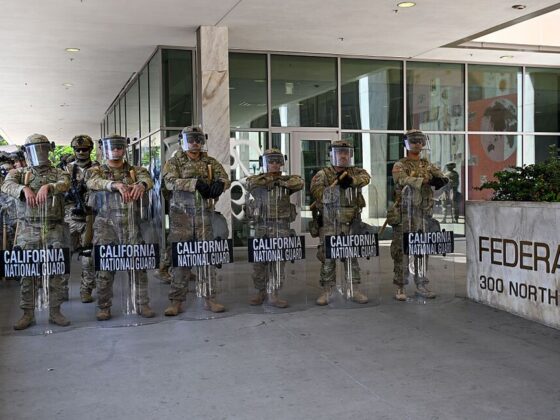
Trump’s recent deployment of federalized National Guard troops and U.S. Marines to Los Angeles to enforce immigration crackdowns has drawn intense criticism. The situation escalated further on Thursday when Democratic Senator Alex Padilla was forcibly removed and handcuffed by federal agents after questioning Homeland Security Secretary Kristi Noem at a press conference.
Democrats argue these incidents reflect Trump’s increasing use of federal power to suppress dissent, with some warning that the president is shifting toward openly authoritarian governance.
Sharp Divides Within the Democratic Party
Fetterman Breaks Ranks to Support Israel Unconditionally
Not all Democrats opposed Israel’s actions. Senator John Fetterman of Pennsylvania, a staunch supporter of Israel, fully endorsed the attack.
“Our commitment to Israel must be absolute,” Fetterman wrote on X. “We must provide whatever is necessary—military, intelligence, weaponry—to support Israel in its efforts to strike Iran and eliminate nuclear threats.”
Fetterman’s position underscores the deep and complex divisions within the Democratic Party when it comes to Middle East policy, particularly the balance between supporting Israel’s security and pursuing peaceful diplomatic solutions.
What’s Next: A Dangerous Crossroads for U.S. Foreign Policy
Will Diplomacy Survive?
The question now facing the international community is whether Iran will return to the negotiating table or retaliate militarily. Trump’s assertion that Iran has “a second chance” seems at odds with the increased likelihood that diplomatic efforts have collapsed.
Analysts suggest that the next 72 hours will be critical, with the potential for rapid escalation depending on Tehran’s response.
Domestic and Global Repercussions
The attack has not only deepened partisan divisions in Washington but also raised the stakes for Trump’s presidency as he juggles intensifying domestic unrest, legal challenges to his use of military force in U.S. cities, and a potentially catastrophic foreign policy crisis.
If the situation spirals into regional war, Trump’s gamble may define his second term in ways that neither he nor his allies anticipated.
A Nation on Edge, a Region on the Brink
Israel’s strikes on Iran have reignited old tensions and set off a new round of political, diplomatic, and military uncertainty.
Republicans see a bold defense of an ally. Democrats see a reckless provocation. The world sees a dangerously fragile situation that could tilt toward war or, with careful diplomacy, back toward peace.
The coming days will reveal whether this is the beginning of a new era of conflict—or a last-minute chance to rescue the path to negotiation.