A Viral Photo and the Power of Speculation
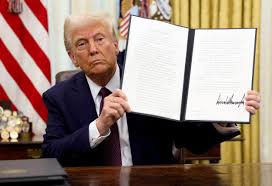
Photographs showing U.S. President Donald Trump, 79, with visible bruising on the back of his right hand and swollen ankles sparked a social media storm this week, prompting widespread speculation about his health status.
In response, the White House convened an emergency press briefing on Thursday to clarify the situation. Spokeswoman Karoline Leavitt read aloud a letter from Trump’s personal physician, Navy officer Dr. Sean Barbabella, confirming that the conditions were benign and not indicative of any serious medical issue.
“President Trump remains in excellent health,” Barbabella emphasized in the letter.
But the rapid mobilization of a public health update — and Trump’s use of makeup to conceal the bruising — suggests the political stakes are high, especially with the 2026 midterms approaching and age-related concerns shadowing both major presidential candidates.
Trump’s Swollen Legs: Common, Not Critical
Diagnosed with Chronic Venous Insufficiency
According to the White House medical report, Trump has been diagnosed with chronic venous insufficiency (CVI) — a condition where the veins in the legs struggle to return blood to the heart efficiently. It’s common in older adults, particularly those over the age of 70.
Dr. Barbabella confirmed via ultrasound that there is no evidence of deep vein thrombosis (DVT) or arterial disease. He also ruled out heart failure, kidney problems, and other systemic issues.
“It’s a benign and common condition,” Leavitt said during the press conference. “The president is not experiencing discomfort and continues his schedule without interruption.”
What Is Chronic Venous Insufficiency?
Experts in vascular medicine weighed in to contextualize the diagnosis:
-
Dr. Kwame Amankwah, Chief of Vascular Surgery at the University of Connecticut, noted that untreated CVI can lead to ulcers or more serious complications, but is typically managed with compression stockings and leg elevation.
-
Dr. Todd Berland, Director of Outpatient Vascular Interventions at NYU Langone Health, emphasized that CVI is “a quality-of-life issue, not a quantity-of-life issue.” In short, it’s uncomfortable, but not life-threatening.
Bruised Hand: From “Too Many Handshakes”
Public Makeup Use Draws Attention
Observers first noticed the discoloration on the back of Trump’s right hand when close-up photographs revealed not just swelling but makeup applied over the area — an unusual move for the famously image-conscious president.
Leavitt explained that the bruising is the result of frequent handshaking — a routine part of Trump’s ongoing campaign events — combined with aspirin use.
Barbabella confirmed this in his letter:
“The bruising is consistent with minor soft tissue irritation from frequent handshaking and the use of aspirin, which is part of a standard cardiovascular prevention regimen.”
This detail serves a dual purpose: it signals both a common-sense explanation for the hand bruise and subtly reaffirms that Trump is taking proactive steps to prevent heart disease — a reassurance to older voters and investors alike.
Why the White House Responded So Fast
The speed of the White House’s response — complete with a full press briefing and physician’s letter — reflects the media sensitivity around Trump’s age and physical condition.
At 79, Trump is the oldest sitting U.S. president in history and already under scrutiny from both voters and opponents. Any visible sign of physical strain, however minor, becomes political fodder in an election cycle where health, stamina, and cognitive fitness are top voter concerns.
“This wasn’t just about bruises. It was about maintaining the optics of strength and control,” noted a political strategist close to Trump’s campaign.
The Strategic Optics Behind Medical Transparency
April Physical Showed No Major Issues
Trump’s last comprehensive physical, conducted on April 11 at Walter Reed National Military Medical Center, showed a normal heart rhythm and no major health problems. Yet the White House’s decision to immediately release Barbabella’s medical letter shows a shift in communications strategy — one that leans into proactive transparency rather than reactive silence.
This is likely a direct response to how health speculation impacted President Biden during his own reelection bid, as well as the legacy of secrecy surrounding past presidential illnesses (such as Reagan’s Alzheimer’s diagnosis or FDR’s polio).
Handshakes as Political Theatre
It’s also worth noting that the “frequent handshaking” explanation does double duty: it doesn’t just explain a bruise — it highlights Trump’s hands-on, people-first approach on the campaign trail.
From rallies to state visits, Trump’s brand has always been grounded in physical presence and charisma, and handshaking has become a symbolic gesture of accessibility.
In this way, even a medical issue becomes an asset — reframed as the price of personal engagement.
Investor and Executive Takeaway: Optics Matter More Than Ever
In a world where presidential posture impacts not just polls but market confidence, these small medical updates carry real consequences.
-
For investors, the key message is continuity: Trump is healthy, on the trail, and his medical issues are non-disruptive.
-
For political strategists, the moment shows how a media storm can be reshaped into a narrative of vitality.
-
For global observers, it’s a case study in how leadership optics are managed in the digital age — where a bruise can spark a crisis unless swiftly spun.
A Bump, Not a Breakdown
Despite internet speculation, bruises and swollen ankles don’t signal a political or health collapse. Instead, the White House flipped the script — turning minor health issues into proof of Trump’s ongoing engagement and fitness.